
2025 will be remembered as the year 3D Gaussian Splatting truly became real for Media & Entertainment.
Not as a promise, not as a research breakthrough, but as a technology professionals could finally trust in production.
For a long time, splats lived in a strange middle ground: visually impressive, undeniably powerful, yet difficult to integrate into real-world workflows. In 2025, that changed. Tools matured, interoperability improved, and most importantly artists and production teams began to build repeatable pipelines around splats. Once that happened, adoption followed naturally.
What made 2025 different was not a single breakthrough, but a collective shift. More tools started supporting 3DGS in meaningful ways. More artists began experimenting seriously with them. And for the first time, splats stopped being something you “tested” and started being something you used.
That transition was clearly visible when splat-based workflows reached high-end film production. A particularly meaningful moment came with their use inside Superman, where Houdini-based 3DGS tools were part of a professional VFX pipeline. Seeing splats survive, not just technically, but creatively, inside a feature film context sent a strong signal to the industry: this technology was ready.
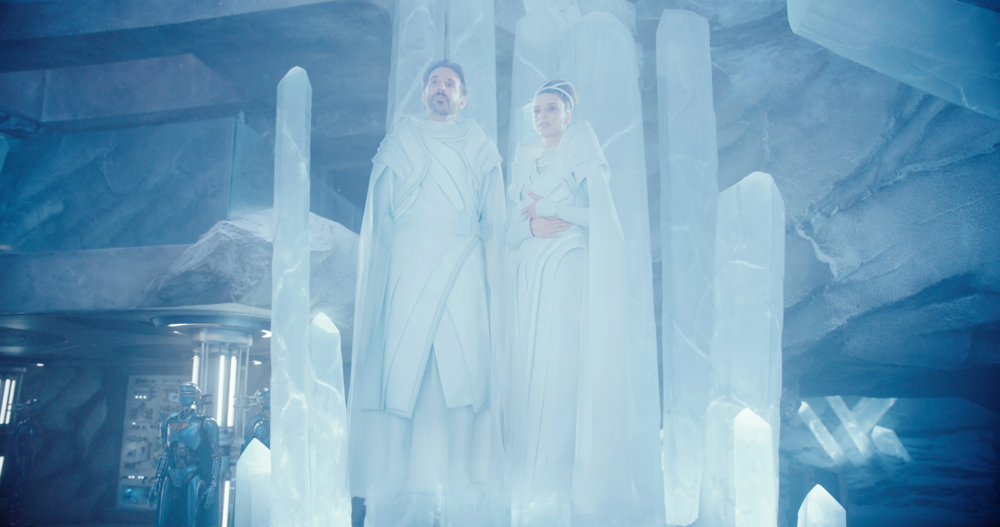
Photo Credit: A final still from Framestore
At the same time, workflows began to crystallize. At Volinga, one of the most important moments of the year was our partnership with XGRIDS. What made this collaboration special was not just the technology, but the flow: capturing real-world environments with LiDAR, processing them efficiently, and deploying them into Unreal Engine-based virtual production setups in a matter of hours.
For producers, DoPs, and VP teams, this was a turning point. Suddenly, splats were not something that required specialized knowledge or long turnaround times. They became a practical bridge between real locations and virtual stages: accurate, fast, and visually convincing. In many cases, they simply made more sense than traditional approaches.
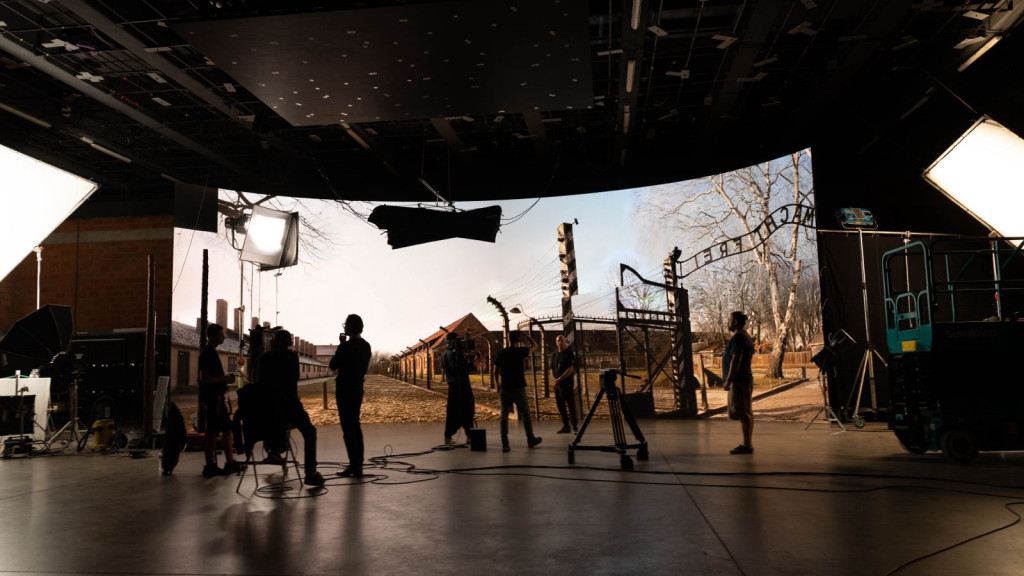
Photo Credit: “Picture from Auschwitz”
As we move into 2026, that momentum is only accelerating.
One of the clearest trends we see is the normalization of splats inside professional virtual production workflows. Previs, techvis, and ICVFX are natural homes for this technology. Splats offer a rare balance: they are dramatically faster to acquire than full CG environments, yet they retain real-world lighting, depth, and spatial coherence. For LED stages in particular, this balance is incredibly powerful. It allows teams to work with environments that feel grounded and believable, without paying the usual cost in time and complexity.
Another important shift is happening at the software level. In late 2025, The Foundry announced native 3D Gaussian Splat support in the open beta of Nuke 17.0. This may seem like a technical detail, but its implications are far-reaching. When splats can be imported, manipulated, and rendered inside tools artists already rely on daily, they stop being exotic. They become one more creative option available at any stage of production.
This is the kind of adoption that truly scales. In 2026, we expect to see more tools embracing splats natively, better interoperability between platforms, and far less friction moving splats across departments. For artists, this means fewer pipeline constraints. For productions, it means lower risk and greater creative flexibility.
Beyond workflow adoption, 2026 also looks set to push splats into entirely new territory.
On one side, 4D Gaussian Splatting is opening the door to dynamic, time-based volumetric content. Early use cases already hint at what’s possible: performances captured volumetrically, re-framed and re-lit long after the shoot, giving directors a level of creative freedom that traditional capture simply cannot offer. This isn’t about replacing actors or cinematography. It’s about extending them, and allowing creative decisions to continue evolving in post-production.
On the other side, we are seeing the emergence of generative splats. Models like Marble from World Labs can generate complete 3D environments from images or text and export them directly as splats.
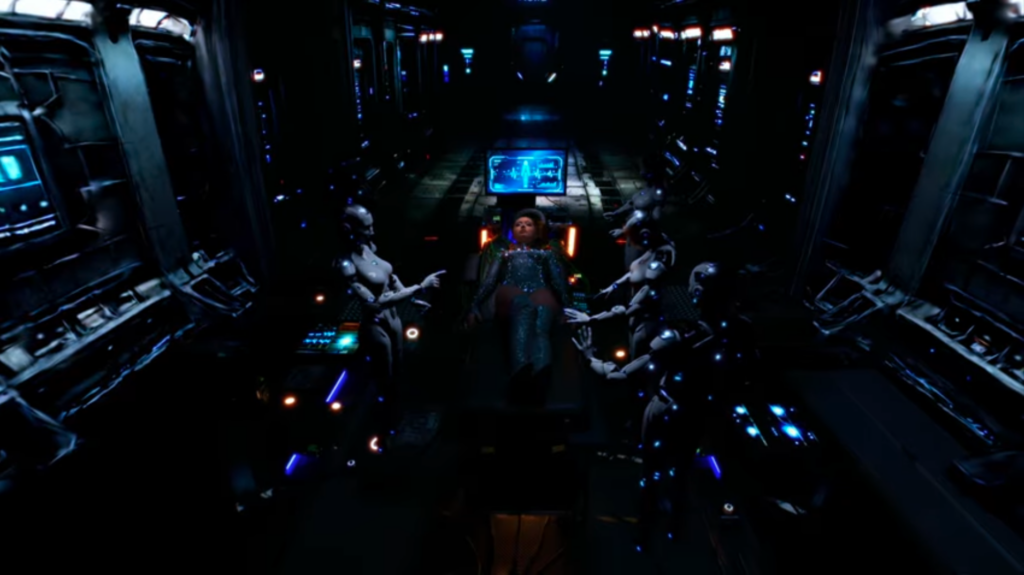
Photo Credit: A final still from NACZZOS – “BE LIKE ME” music video
This is still early, but the direction is clear. Generative splats have the potential to dramatically accelerate world-building, offering artists strong starting points that can be refined, art-directed, and integrated into production workflows. Used well, they won’t replace creativity. They will amplify it!
Taken together, all of these points lead to a simple conclusion.
3D Gaussian Splatting is no longer about proving that the technology works.
That question was answered in 2025.
The real story of 2026 is about what creators will do with it.
By accelerating 3D workflows, reducing friction, and preserving real-world detail, splats are giving artists, filmmakers, and production teams more freedom to focus on what matters most: telling stories. At Volinga, we believe this shift is only just beginning, and we’re excited to keep building the tools and workflows that make it possible.
The foundation is set. Now the creative acceleration truly begins.
Want to learn more about Gaussian Splats can support your 2026 productions? Click HERE to chat with our team.
Credits
Written By: Fernando Rivas-Manzaneque, CEO & Co-founder at Volinga